The Revenue Gap Most Labels Won't Tell You About
May 29, 2026 · from the GateCurate team
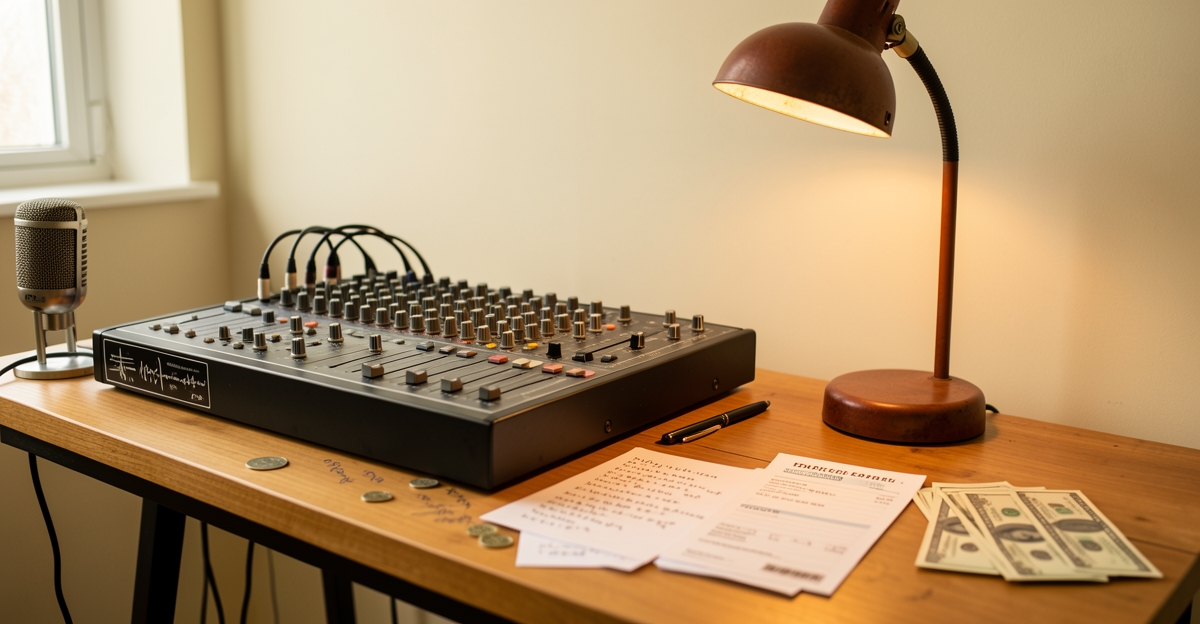
The Revenue Gap Most Labels Won’t Tell You About
Streaming is the biggest thing in music — and the smallest line item on most independent artists’ bank statements. The real money is in what happens when artists stop waiting for platforms to pay them.
The Reality
The numbers tell a story the industry doesn’t like to talk about. Streaming services typically pay a fraction of a cent per stream , which means an artist needs an enormous volume of plays to scrape together rent money. On Spotify, the average payout per thousand streams is so small that earning even modest income could take hundreds of thousands of streams , far out of reach for most musicians operating without label support or massive marketing budgets.
Even worse, Spotify has moved toward a policy where songs below a minimum streaming threshold no longer earn royalties at all . The company claimed this was aimed at removing fraudulent content, but the collateral damage hit countless indie artists. It signaled a deeper message: if you’re not reaching scale, you’re not worth paying.
Meanwhile, the vast majority of artists earn very little from their music in recent surveys, forcing most to rely on outside employment just to keep making art. Financial constraints are now cited by most artists, a sharp rise in recent years , replacing “lack of exposure” as the number one career roadblock.
The math is brutal. The exposure is real. The revenue is not.
Why It Costs You
The streaming model isn’t just low-paying — it’s designed to benefit scale players. Larger artists and major labels often benefit the most due to their ability to generate high streaming volumes and secure prominent playlist placements . For smaller or emerging artists, competing in this space requires additional strategies to maximize visibility and grow their audience.
But the real cost isn’t just the pennies per stream. It’s the opportunity cost. Every hour spent chasing playlist placements or optimizing for algorithmic discovery is an hour not spent building the relationships that actually pay.
The artists who will build sustainable revenue in the coming years are not chasing every new platform — they are building long-term business on their own terms.
Global sync licensing revenues have grown for several consecutive years, while direct-to-fan sales now represent a substantial and rapidly growing share of artist income. Artists who diversify revenue streams — sync, merchandise, fan subscriptions, and licensing — are building careers. Artists who rely solely on streaming are building hope.
Streaming still accounts for the largest slice of total revenue, yet its growth has slowed as saturation set in. Merchandise and physical releases are expanding faster, showing fans will pay premium prices for tangible products and collectible editions. That pivot diversifies income and lessens reliance on low per-stream payouts.
How Right-Fit Operators Handle It
The artists who are winning right now aren’t abandoning streaming — they’re reframing it. They treat streaming as discovery, not distribution, reframing platforms like Spotify as tools for growth, not primary sources of income .
They’re building what the industry now calls the “superfan economy.” Many artists now earn a meaningful monthly income from a relatively small core of superfans — a single superfan who spends on merch, vinyl, Patreon, or live shows can be worth more than a huge number of casual streamers .
Here’s what that looks like in practice:
Sync licensing as a strategic pillar. A smart catalog strategy uses sync to generate upfront fees and backend royalties, then uses the exposure from those placements to lift Spotify listeners, saves, playlist adds, and long-tail discovery . Sync revenue has climbed sharply in recent years, making it one of the fastest-growing royalty streams.
Direct-to-fan platforms that bypass intermediaries. Artists are increasingly turning to Direct-to-Fan (D2F) platforms like Bandcamp, Patreon, and independent websites to bypass intermediaries and capture a much larger share of revenue . Artists keep the vast majority of their earnings through direct sales, compared to only a small fraction through traditional channels.
Rights literacy and contract awareness. Contracts are where most artist royalty splits are decided. Publishing rights cover the songwriting, while master rights cover the recording . Artists who understand the difference between assignment and licensing — and who negotiate reversion clauses — are building catalogs they actually own.
Merchandise and physical formats as profit centers. Limited vinyl runs, signed posters, and branded apparel sell out fast when tied to a story. Merchandise and physical releases are among the fastest-expanding revenue categories , showing fans will pay premium prices for tangible products.
The Bottom Line
The streaming plateau is real. The opportunity is elsewhere.
Artists who succeed in 2026 and beyond will be the ones who stop treating streaming as the endgame and start treating it as one piece of a diversified revenue portfolio. Sync licensing, direct-to-fan monetization, rights ownership, and superfan engagement aren’t side hustles — they’re the main event.
The focus is moving toward direct-to-fan relationships and tools that allow artists to own their data, distribution, business and long-term sustainability . The artists who build something they actually own — not something they rent from a platform — are the ones who will still be making music ten years from now.
If you’re an independent artist, label, or creative agency helping artists navigate this shift, the question isn’t whether to diversify revenue. It’s how fast you can move.
Ready to rethink how you qualify and engage the artists, clients, and partners who are serious about building sustainable careers? See how GateCurate helps creative operators identify right-fit conversations before the first call — at gatecurate.com/activate.